
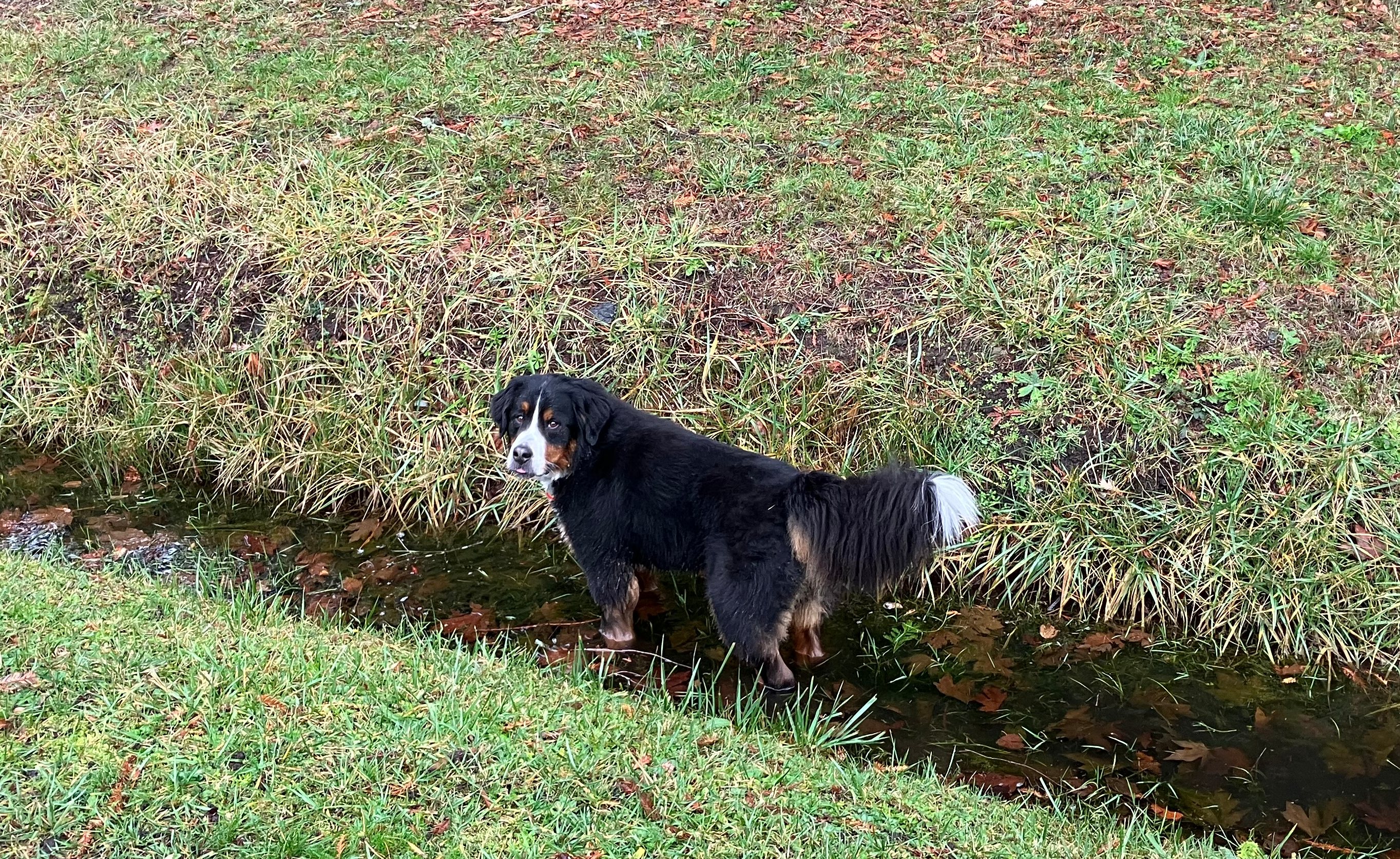
I’m a content person, living in the twilight years of a glorious time on a small island in the Pacific Northwest. Like all beings, I’m shaped by both nature and nurture, embedded and dependent on a dense network of interactions with family, friends, colleagues, and other species, such as our beloved Bernese Mountain dog, Mr. Felix.
Born in the American Midwest into a German household; I grew up in Amsterdam/Holland, Bonn/Germany, Ottawa/Canada, and Rabat/Marocco where I graduated from the Lycée Descartes with a French Baccalaurèat in physics and mathematics in 1974.
I studied Physics and Philosophy in Tübingen, Germany. Ever since then, I think of myself as a physicist. I was awarded my PhD from the Max-Planck-Institut for Biological Cybernetics in Tübingen in 1982. The bulk of my thesis was published in the venerable Philosophical Transactions of the Royal Society. I had two thesis advisors, called Doktorvater in German, Prof. Valentin Braitenberg and Prof. Tomaso (Tommy) Poggio. Together with Francis Crick with whom I worked closley from 1988 to 2004, they helped shape me into the scientist I am today.
I married and my wife and I followed my mentor and advisor, Tommy Poggio to MIT in Boston, where I spent four years as a post-doctoral fellow at the Artificial Intelligence Laboratory and at the Brain and Cognitive Sciences department. Two children were born to us – Alexander and Gabriele.
In the fall of 1986, all four of us moved cross-country to Pasadena, in the foothills of the San Gabriels mountains, when I became a young faculty member at one of the nation’s preeminent science school, the California Institute of Technology. Caltech, in beautiful Southern California, is an oasis, an ivory-tower dedicated to educating the best and brightest in the way of science and the pursuit of the truth. For more than a quarter of a century I lead a laboratory, taught and mentored more than one hundred graduate and post-graduate students. For my and their academic pedigree see here.
Our laboratory published >350 papers in the peer-reviewed literature that have been cited >160,000 times, countless book chapters, patents and columns in magazines.
Following a challenging few years during which I left my then-wife and divorced, I transitioned from being a Professor within the hallow halls of academe, with all of its freedoms, to become the Chief Scientist and, subsequently, the President of a focused and goal-driven institution, the Allen Institute for Brain Science in Seattle, in the awesome Pacific Northwest. Our team of more than 300 scientists, engineers and other staff were engaged in two large-scale “Big Science” projects.
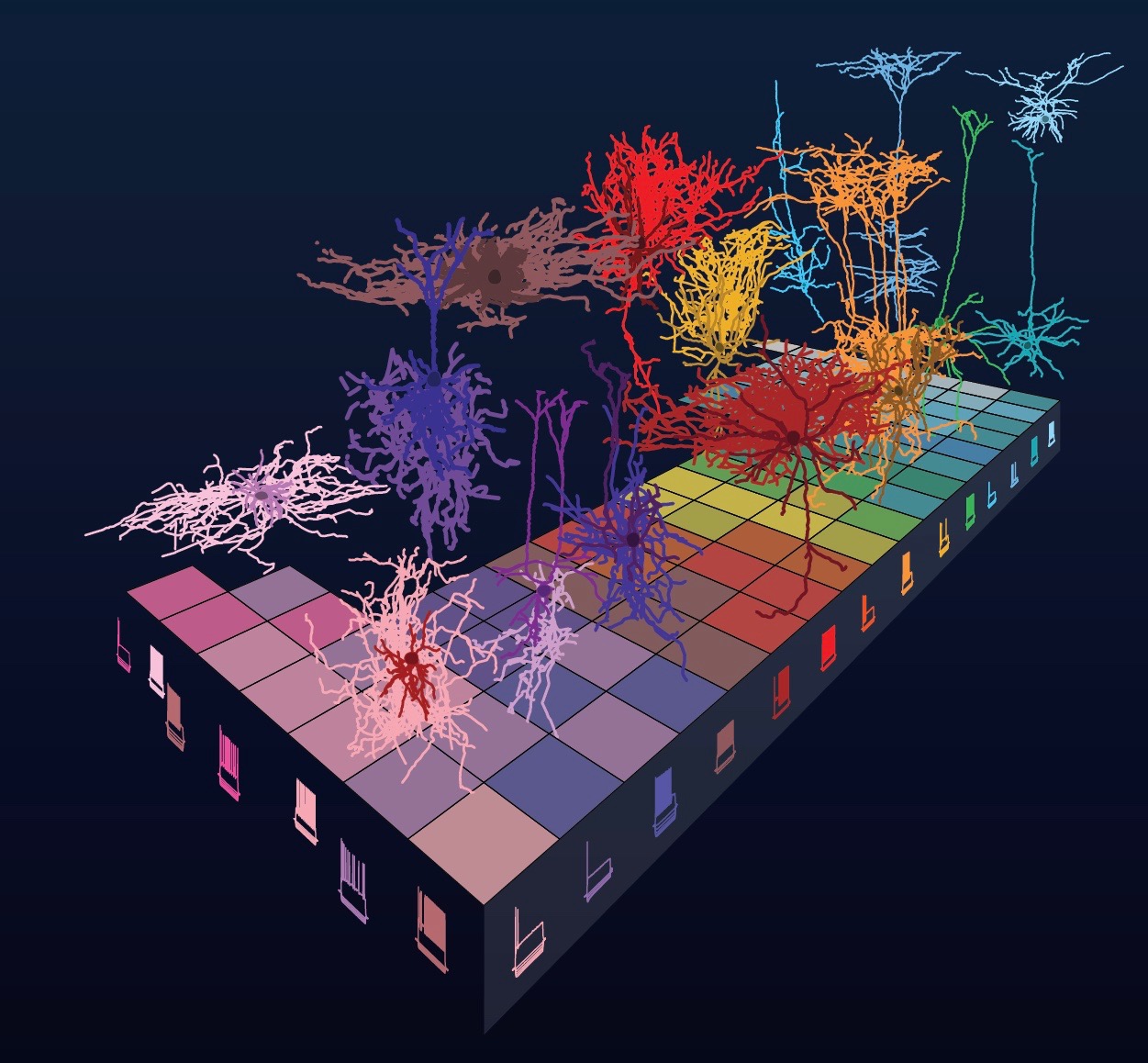
One is a foundational and high-throughput effort to identify and catalogue all cortical cell types in the mouse and human brain using single-cell transcriptional, morphological, electrical and connectional properties and to organize them into a taxonomy. Sort of like the construction of the biological equivalent of the Periodic Table of chemical elements.
The second was to a build cellular-level Brain Observatory using optical and electrical recording in behaving mice. My dream from the start had been to construct a central facility for recording brain-wide cellular-level activity using both optical and electrical techniques in behaving mice and to make the usage of such a Brain Observatory available to any scientist following a competitive screening process of external proposals, similar to the operating model of all astronomical observatories for the past century. This has now turned into the OpenScope Brain Observatory, a platform for high-throughput and reproducible brain science experiment in behaving mice that is available to anyone on the planet’s face.
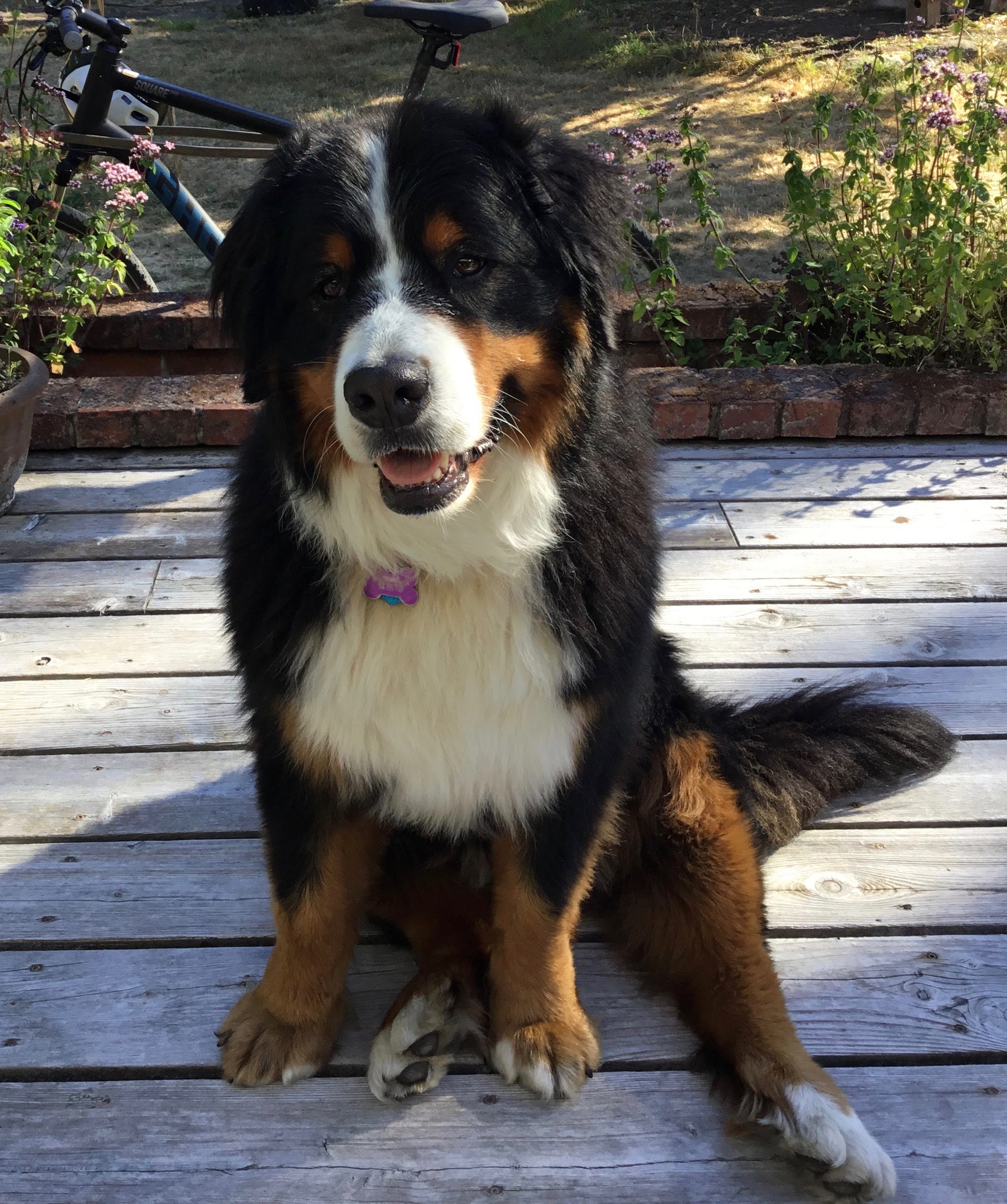
I remarried and now live happily with my wife in Seattle and part-time on San Juan Island, in the Salish Sea, between Canada and the US. We both love big scruffy dogs. Here is Ruby, our first Berner.
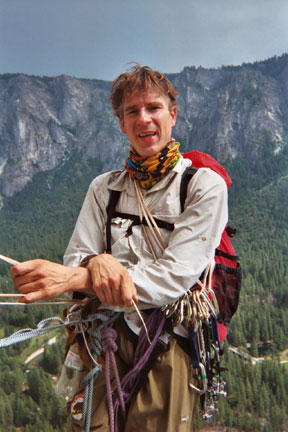
I lose myself in states of flow and ecstasy while climbing mountains and big granite walls, long-distance running, biking, and rowing crew.
Here is an insightful essay and psychogram, written by the science journalist John Horgan, about why I do the sort of science I do, and live the life I do.
In the summer of 2000, my son and I joined an archeological expedition to dig up part of the Temple built by King Herod in 20 BC in Caesarea, along the Israeli coast. While there, I had the classic Macintosh Apple logo tattooed onto my right deltoid. Together with the Boeing B-747 Jumbo Jet and the Golden Gate Bridge in San Francisco, the Apple Macintosh is one of the most beautiful and elegant artifact of the 20-th century. A perfect marriage of form and function.
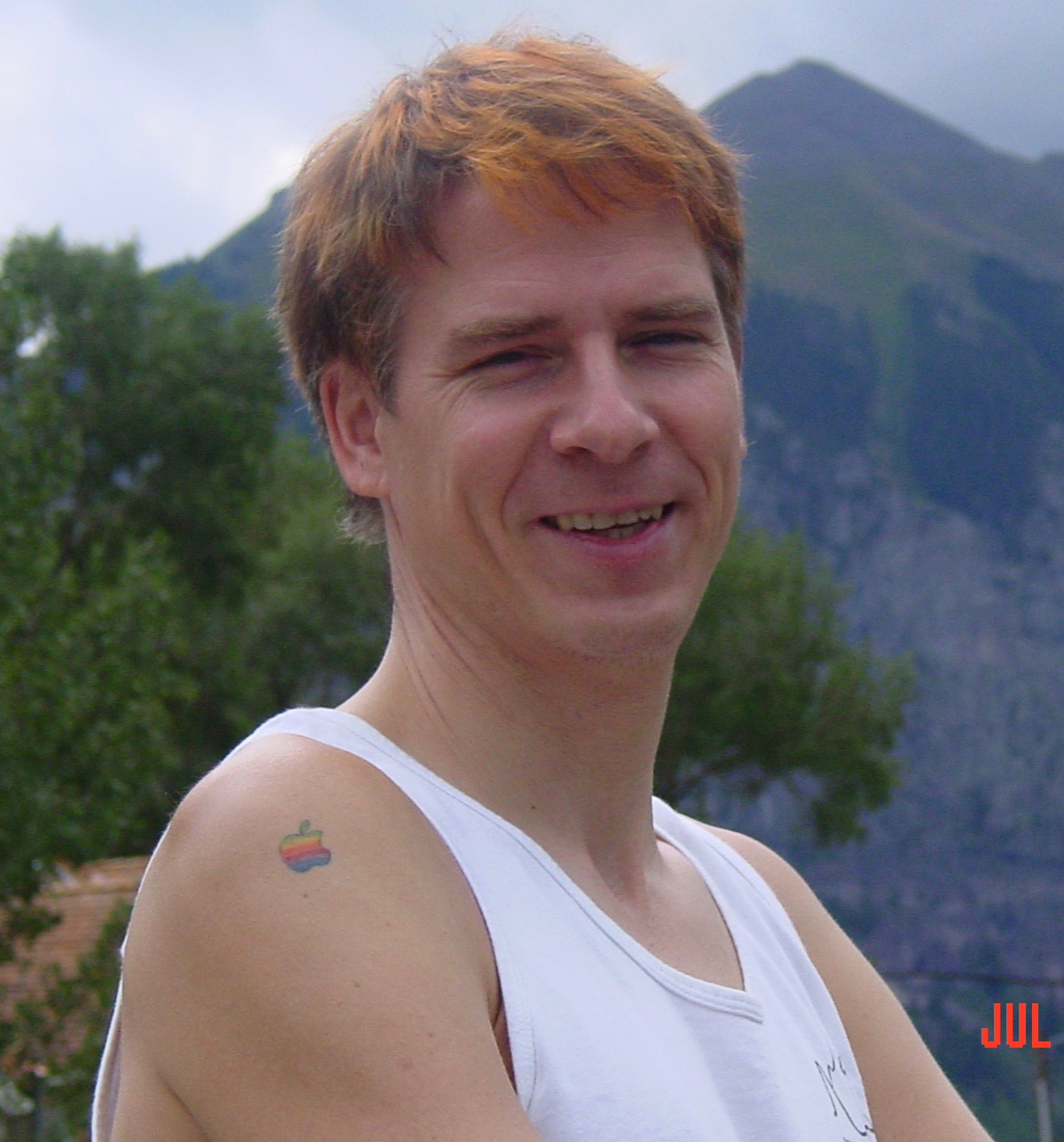
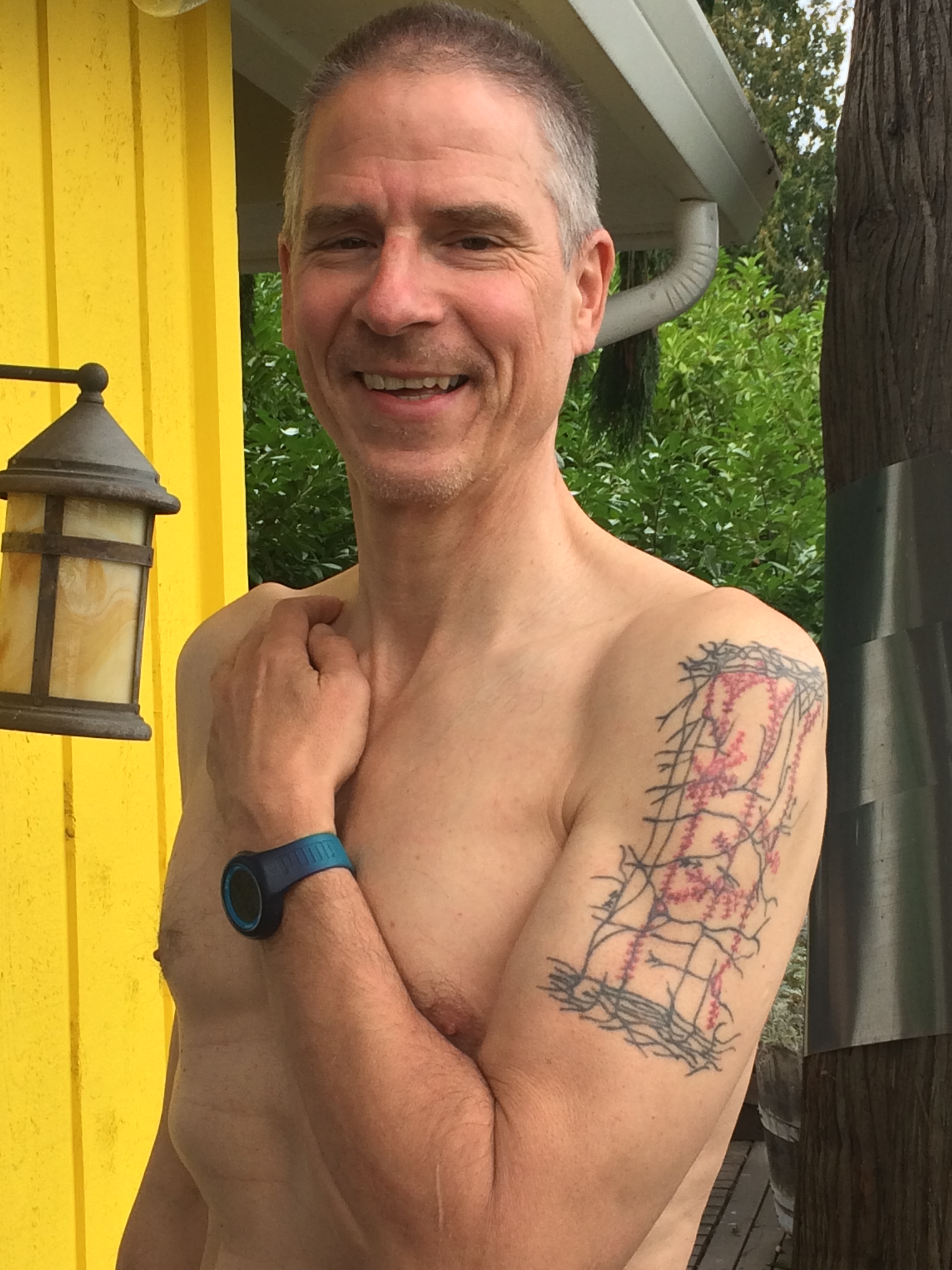
Subsequently, for balance, I got another tattoo of human cortical pyramidal neurons, based on a Ramon y Cajal drawing, on my left deltoid.
In 2023, I stepped down from all executive responsibilties to return to the ideal life of regular scientist at the Allen Institute, focusing on cortico-thalamic circuits and their involvement in various conscious states (including during anesthesia and psychedelics).
I am also the Chief Scientist of the Tiny Blue Dot Foundation in Santa Monica, California. Its mission is to support research into neuroscience- based therapies to help people understand that they live in mental worlds of their own making, their Perception Box, a construct of their mind, whose limitations and biases they can overcome.
My guiding principle is the Royal Society’s motto in London: nullius in verba, or “take no one’s word for it”— in other words, rely on the original data rather than someone else’s interpretation.
 The Passions of Christof Koch